







Description
🏛 UPSC CSE Performance Prompt System
A Structured AI Framework for Serious Civil Services Aspirants
(Prelims + Mains + Optional + Essay + Interview Integrated)
UPSC Civil Services Examination is not just a knowledge test.
It is a multi-stage evaluation of:
- Conceptual clarity
- Analytical depth
- Writing structure
- Judgment under uncertainty
- Long-term consistency
Many serious aspirants study hard but prepare without structure.
They:
- Read static and current separately without integration
- Practice answer writing without evaluation systems
- Give mocks without extracting performance patterns
- Overprepare Prelims but under-structure Mains
- Choose optional without reverse engineering PYQs
- Struggle with essay depth and coherence
- Experience burnout across multi-year preparation
This system is designed to bring structure to serious preparation.
Not through shortcuts.
Not through unrealistic guarantees.
But through performance-oriented thinking.
What Is This?
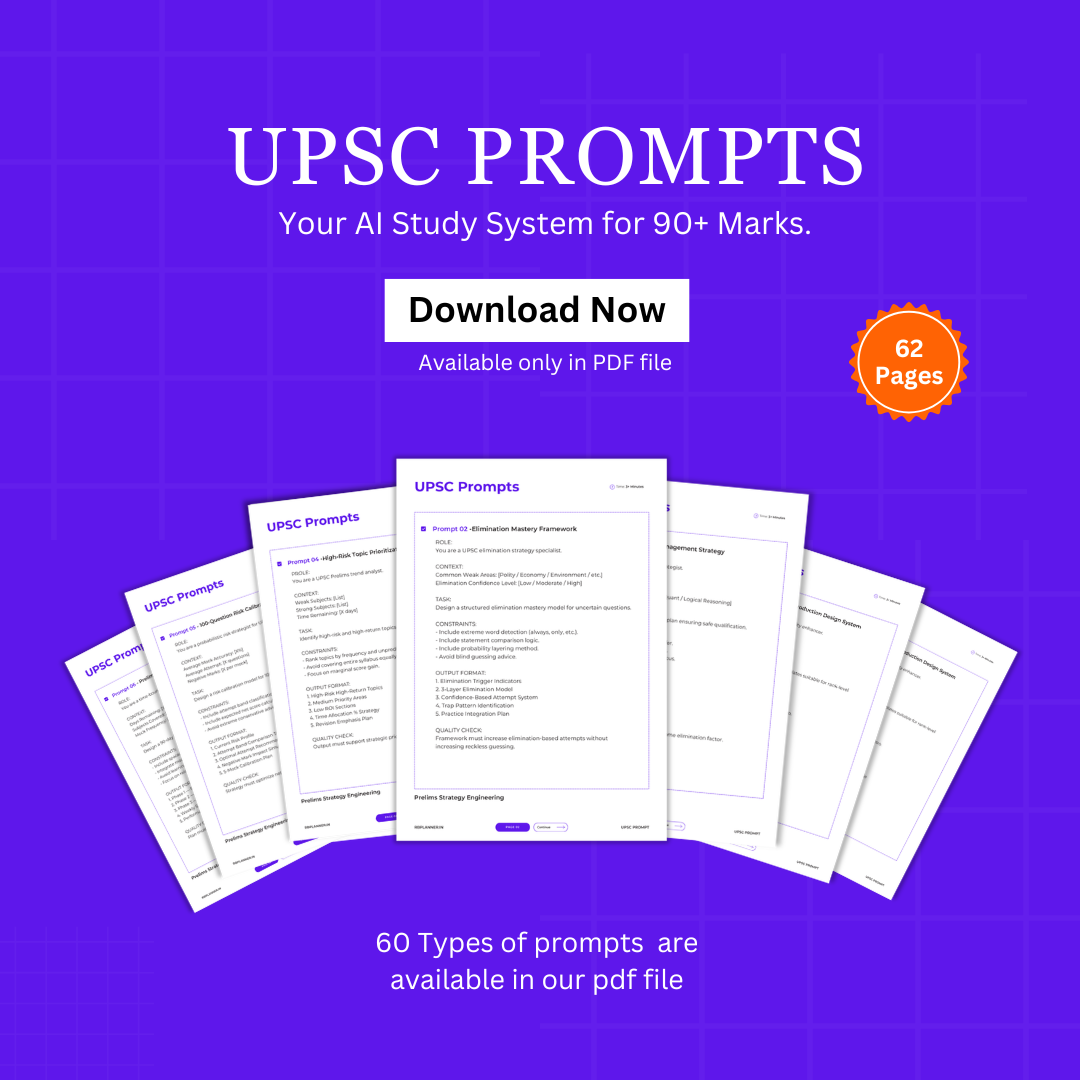
The UPSC CSE Performance Prompt System is a collection of 60+ professionally engineered AI prompts designed specifically for:
- Prelims survival
- Mains answer quality
- Optional depth calibration
- Essay maturity
- Interview readiness
- Mock intelligence
- Multi-year stability
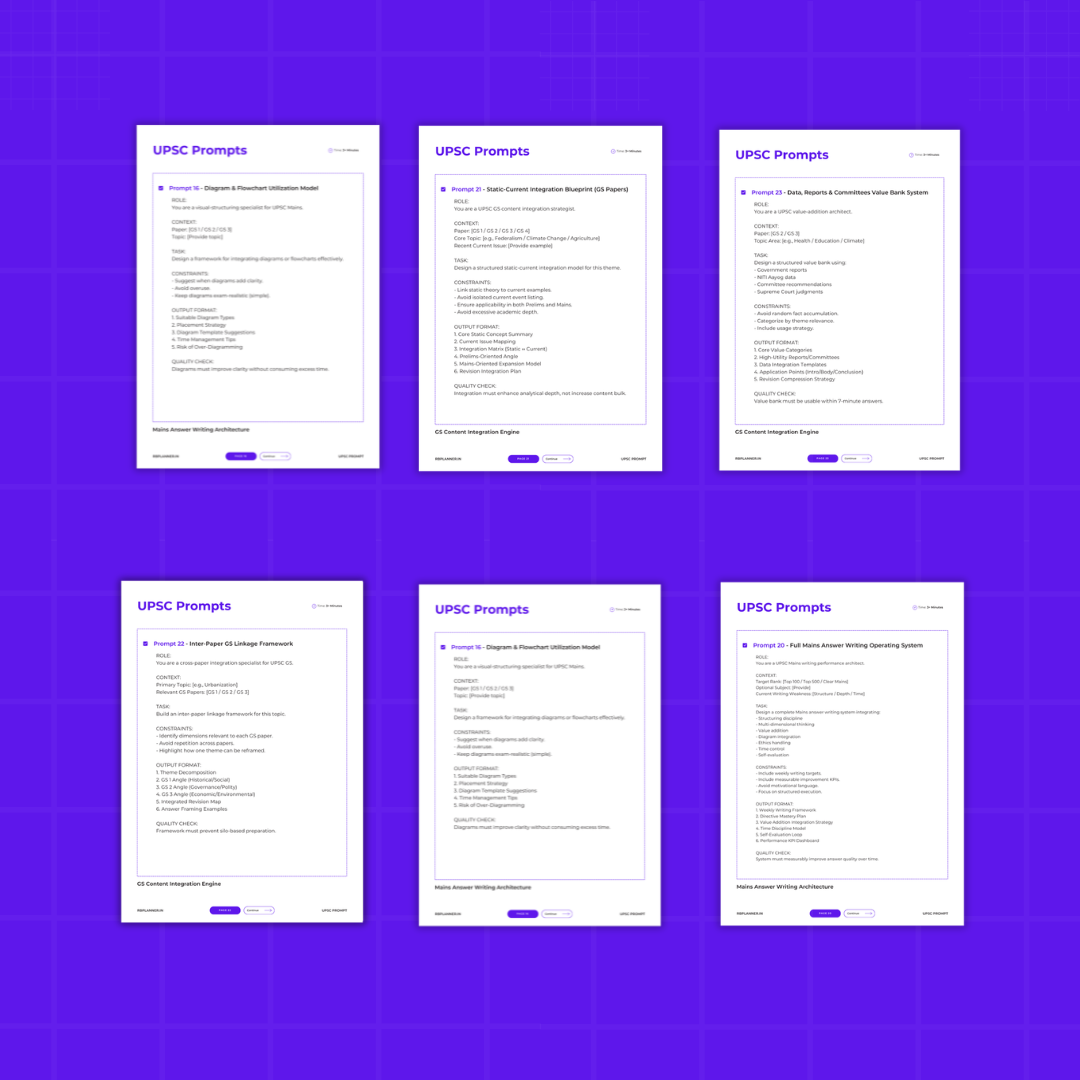
Each prompt follows a structured architecture:
- Defined expert role
- Clear analytical task
- Output format control
- Directive alignment
- Measurable improvement focus
Instead of asking AI:
“Explain federalism.”
You use prompts like:
- Reverse engineer my Prelims safe score buffer
- Design elimination calibration for 100-question GS paper
- Build a 7-minute answer structuring blueprint
- Integrate static and current for GS 2 governance topics
- Reverse engineer optional syllabus using PYQs
- Create a philosophical expansion framework for essay
- Diagnose plateau in GS mock scores
- Build a long-cycle mental endurance system
This turns AI into a structured preparation analyst — not just a doubt solver.
What This System Covers
The prompts are organized into 7 strategic modules.
🏛 Module 1 — Prelims Strategy Engineering
Focuses on:
- Elimination mastery
- Attempt calibration
- Risk band simulation
- Static-current integration
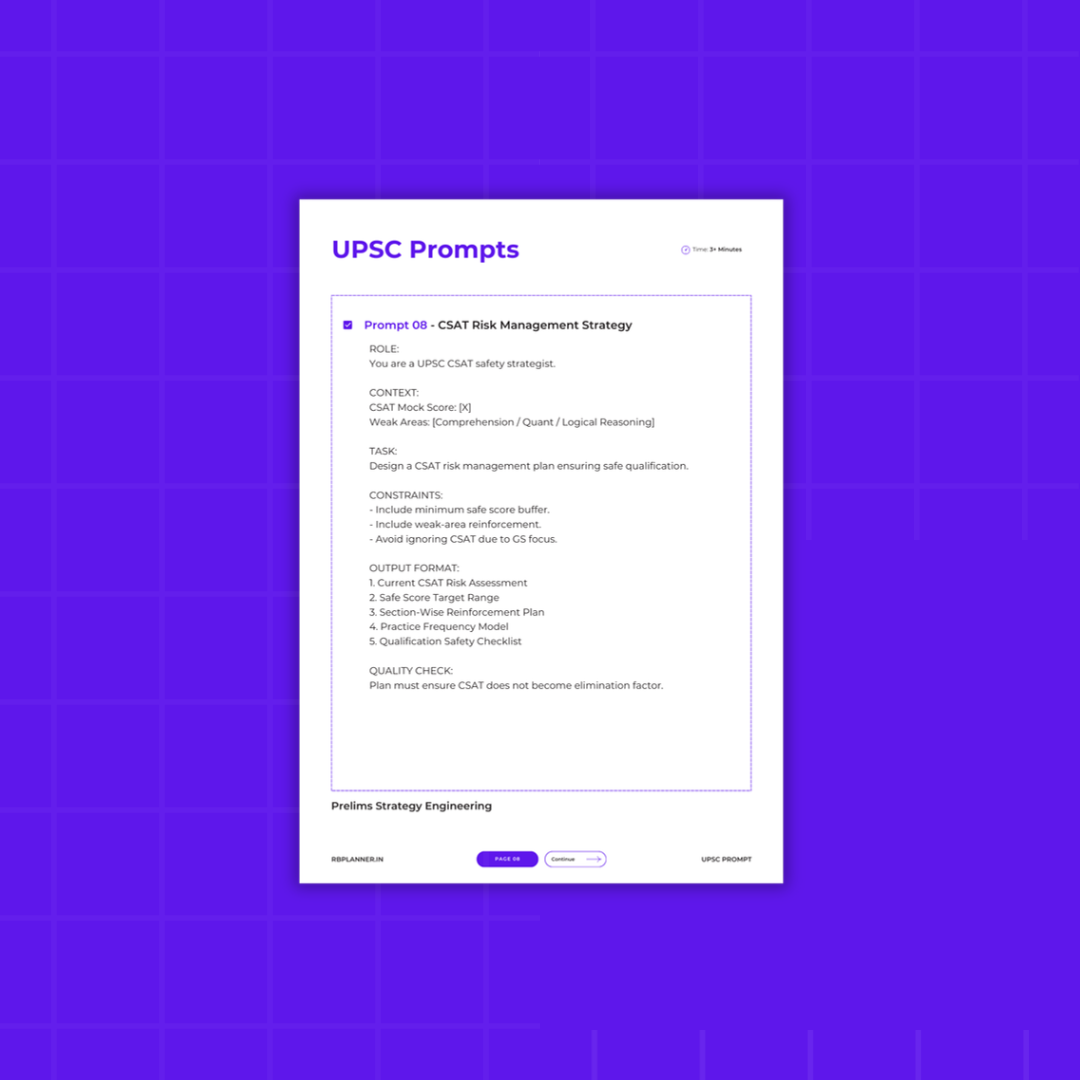
- CSAT safety planning
- Mock trend stabilization
Prelims is treated as a probabilistic performance system — not a memory race.
🏛 Module 2 — Mains Answer Writing Architecture
Covers:
- 7–8 minute structuring discipline
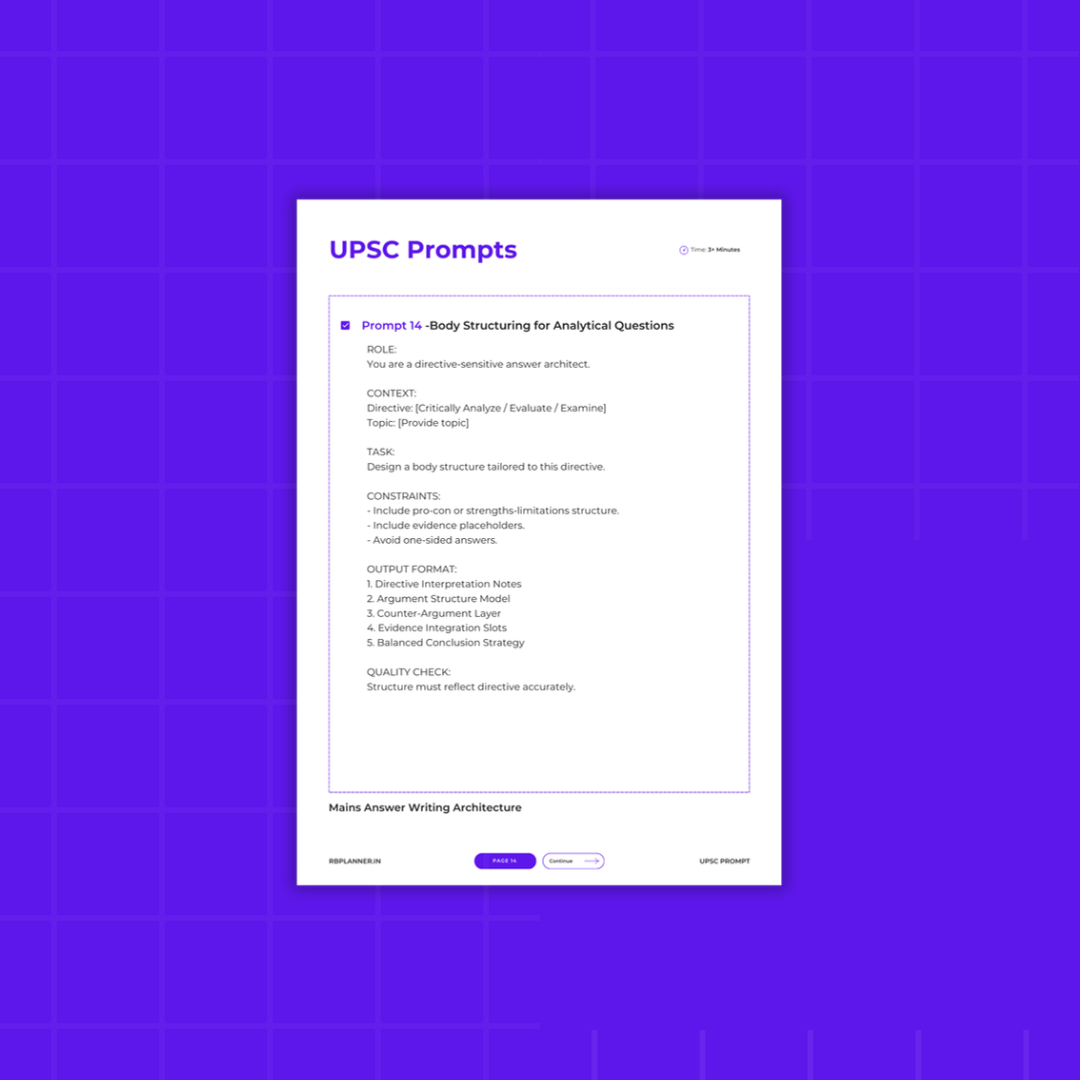
- Directive-sensitive writing
- Multi-dimensional expansion
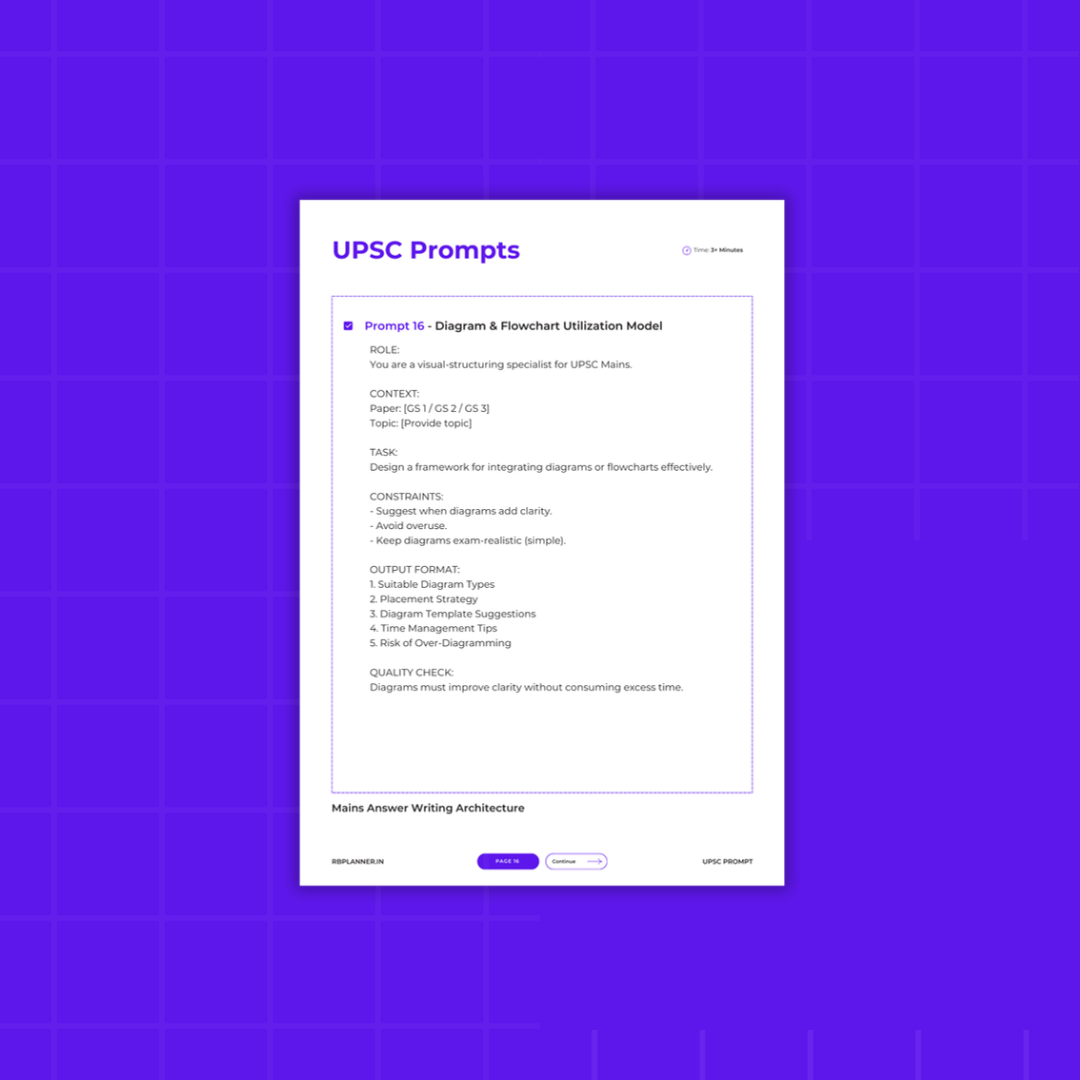
- Diagram and flowchart integration
- Ethics case study handling
- Time completion models
This module addresses quality, clarity, and completeness.
🏛 Module 3 — GS Content Integration Engine
Focuses on:
- Static-current linkage
- Inter-paper GS integration
- Policy analysis frameworks
- Cause-effect chain modeling
- Value addition banks (reports, data, judgments)
- Thematic note compression
This prevents fragmented preparation.
🏛 Module 4 — Optional Subject Domination System
Designed for:
- Rational optional selection
- PYQ-driven syllabus mapping
- Depth calibration
- Scholar integration (where relevant)
- Paper 1 vs Paper 2 balance
- Optional mock correction loops
Optional often determines rank differentiation.
This module structures that preparation.
🏛 Module 5 — Essay Intelligence Framework
Covers:
- Theme deconstruction
- Philosophical depth expansion
- Multi-dimensional body flow
- Introduction and conclusion design
- Example integration
- Self-evaluation systems
Essay is treated as a structured thinking exercise — not GS repetition.
🏛 Module 6 — Mock & Evaluation Intelligence
Includes:
- Prelims risk calibration
- GS copy evaluation checklists
- Optional depth audits
- Essay refinement systems
- Plateau diagnosis
- KPI-based performance tracking
Mocks become analytical tools instead of emotional events.
🏛 Module 7 — Psychological Stability & Multi-Year Endurance
Focuses on:
- Burnout detection
- Attempt planning
- Result-delay anxiety management
- Discipline rebuild
- Interview confidence calibration
- Long-term sustainability systems
UPSC is a multi-year commitment for many aspirants.
Stability matters.
What This System Is NOT
This is not:
- A shortcut to clear UPSC
- A substitute for reading core books
- A replacement for PYQs
- A guarantee of rank
- A promise of selection
It does not reduce the need for:
- Consistent reading
- Revision
- Writing practice
- Mock testing
- Deep thinking
It only structures and sharpens your preparation process.
Results depend entirely on:
- Your effort
- Your discipline
- Your consistency
- Your implementation
Who Is This For?
This system is suitable for:
- Serious aspirants preparing for Prelims + Mains together
- Candidates stuck at mock score plateaus
- Aspirants struggling with answer structure
- Students preparing for 2nd or 3rd attempt
- Optional confusion stage candidates
- Essay improvement seekers
- Aspirants aiming for structured preparation without chaos
It may not be useful for someone looking for shortcuts without sustained effort.
Why Prompts Instead of Notes?
Because static notes cannot:
- Analyze your mock trends
- Adjust your Prelims attempt band
- Detect structural weaknesses in your answers
- Calibrate optional depth
- Design time-bound writing systems
- Diagnose plateau patterns
- Adapt to your preparation stage
These prompts make AI respond in structured, directive-sensitive, performance-focused ways based on your real inputs.
You provide:
- Stage of preparation
- Mock scores
- Weak areas
- Time remaining
- Attempt history
The system adapts.
What You May Gain (If Used Properly)
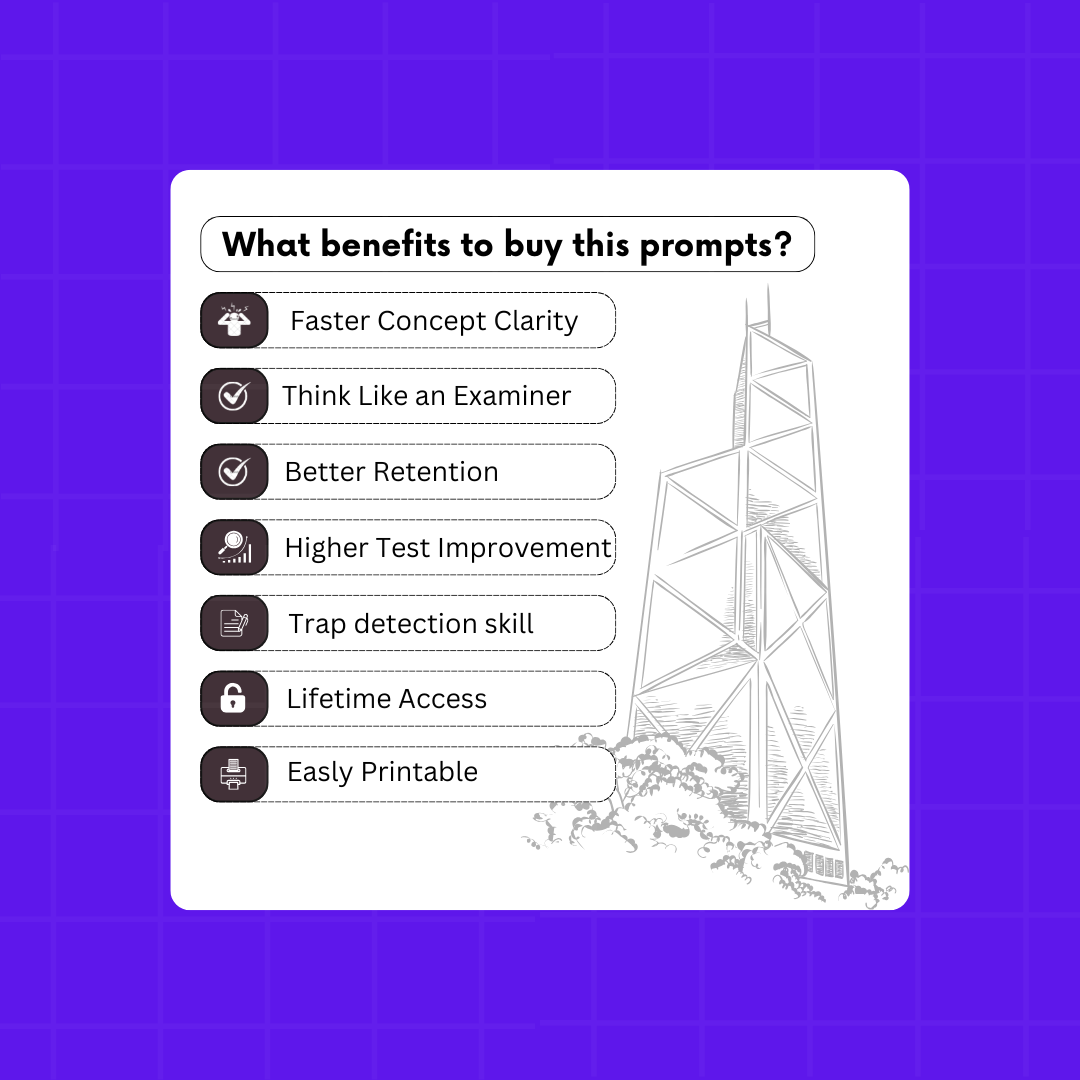
If applied consistently and honestly, this system can help you:
- Improve Prelims risk management
- Write more structured Mains answers
- Integrate static and current better
- Strengthen optional depth
- Enhance essay maturity
- Detect and fix performance plateaus
- Maintain mental stability across attempts
It does not promise success.
It supports structured improvement.
Final Note
UPSC CSE rewards:
- Clarity
- Balance
- Analytical depth
- Discipline
- Consistency
This system is built around those principles.
No exaggerated claims.
No inflated guarantees.
No unrealistic timelines.
Just a structured preparation framework.



Reviews
There are no reviews yet